
Lessons in leadership and differentiation (Part 1)

Taken from the book “Leadership for Differentiating Schools and Classrooms” by Carol Ann Tomlinson and Susan Demirsky Allan

What is differentiation?

It refers to a teacher’s reacting responsively to a learner’s needs. Understanding the students’ needs to express humor, or work with a group, or have additional teaching on a particular skill and many other needs (esp looking at the many learning styles which students have). The whole idea of differentiation is to maximise students’ understanding and individual success and gradually applying the knowledge to their life.

The book listed out many principles that eventually builds up on the concept of differentiation and apparently, it’s not just lessons, but involved the teachers (in attitudes and teaching methods) and even the supporting education staff and the environment (public/parents) which can be directly/ indirectly involved. All in the name of providing the best education for students!

(i) Student Characteristics for which teachers can differentiate

Students’ Readiness, Interest and Learning Profile

(ii) Characteristics of High-Quality Curriculum and Instruction

– Is clearly focused on the essential understandings and skills of the discipline that a professional would value.

– Is mentally and affectively engaging to learners.

– Is joyful- or at least satisfying.

– Provides choices.

– Is clear in expectations.

– Allows meaningful collaboration.

– Is focused on products that matter to students.

– Connects with students’ lives and world (isn’t this what aL.I.V.E. is all about?:))

Is fresh and surprising.

– Seems real to the student.

– Is coherent (organized, unified, sensible) to the student.

– Is rich, deals with profound ideas.

– Stretches the students.

– Calls on students to use what they learn in interesting and important ways.

– Involves the students in setting goals for their learning and assessing progress toward those goals.

5 great teaching techniques

here’s five teaching techniques taken from 2think2learn video clip. found this in youtube anyway. good as a reminder to me and for others :))

1. Always have a genuine purpose behind the lessons you are delivering.

2. Make sure the material is engaging and interactive.

3. Allow students opportunity to direct their own learning.

4. Mistakes are an integral part of the learning process.

5. Humour releases tension – so use it often!

alive teaching

i really like this teaching technique. i hope one day i can do something like this in my classes. it’s so lively and engaging and i believe the students will enjoy the lesson and perhaps, learn and remember more!!

i’m so going to learn this! 🙂

state of mind

i was asked by a young buddhist friend from a recent workshop, about Yoga.
of course this part of the world was knocked with the issue of yoga being haram-ed in the neighbouring country.

oh no, i am not going to give some academic opinions with hujahs and dalils, well, not yet. but one thing came across my mind.

quite simply yoga is a religious ritual for religions like hindu and some buddhist practices, and when included with mantras and the recitings, of surety, it will affect the state of a muslim’s faith.

but at the same time, yoga has been ‘new-aged’ and most yoga practices only involved body movement and the state of mind and inner peace. most yoga practitioners will not identify themselves as hindus, because of their take that yoga is a practical exercise, aid and not a religious ritual. but this of course, in western perspectives, who have found good in some religious ritual, although wanting to avoid being affiliated to a religion, causes yoga to be ‘neutralized’. so what makes yoga yoga?

if you are to be in a sitting position, breathing properly, and putting your mind in a clear form, would that be yoga? or is it JUST a relaxing practice? is it just a state of mind? if you’re sitting, closing your eyes, trying to relax your mind, however reciting the zikrs instead, will that be a form of *bhakti yoga* on its own? the concept is quite similar doesn’t it? so why not just do zikr? you get your rest, inner peace + some afterworld rewards.

i think it’s just a sensationalied term. y-o-g-a stripped of its hinduist origins. sounds chim right? when actually it’s just a state of mind, a form of meditation. but how do you actually separate the physical movement from the spiritual essence of yoga? is there a point where you can say, ok i’m doing this yoga thing up to this, beyond that it’ll be syirk. would you know that border point? and really it’s very much vague what yoga really is without going through its process. just like sufi being vague and confusing to most because of not experiencing it. but that’s another story altogether.

i have always respected yoga practice as a special hindu ritual, and thus never thought of taking it up. leave the hindus alone!

look at it this way. solat without the spiritual essence. so any person can do solat just to gain some inner peace and tranquil state. that wouldn’t be solat you say right? it’s just any form of ‘exercise’. but how can you do the solat acts without the readings and being in a state of mind you need to be, the state of faith you are in.. it’ll be null.

so yoga without the readings and being in a state of mind you need to be and seek even, then it wouldn’t be yoga. it will only be yoga if you put in faith in doing it and there’s bound to be some reads/mantra you read through even if it’s only “oummmm” which by the way, refers to hindus’ concept of god. yoga comes in a whole package if you haven’t notice already. no matter how agnostic or atheist yoga practitioners are, they are, well, in a state of belief to the ritual. the whole paganistic nature and surroundings elements that go with it.

so, to do or not to do? i’ll just stick to my inter-faith respect towards it but at the point of conflicting my aqidah, i don’t risk it.

changing glass castle

i just finished reading the book The Glass Castle by Jeannette Walls and i loved it. it gives a very different non-stereotypical portrayal of a family who have very educated and talented parents (stereotypically it would be big house, academics career, and glossy looking smart children)who chose to go against the norm and live like wanderers, adventurous and vagabond, moving from one place to another.

really, i can’t stop reading it, and at almost every page, i would be expressing “what??!!” “seriously??” “what kind of a parent is this??” “what the toots?” and “WOW!” but it has nothing to do with violence or psychological disorder, or “My name is Dave”-like stories. it’s just that the Walls parents (yes its based on real life story) have a different way of teaching their four children, imparting values from a different angle. for example, letting insects and pests practically breed in their rickety house because you don’t have the right to kill or destroy other living beings. despite the noble values the parents taught them, and the education they gave from home (the Walls children are geniuses) it’s the standard of living which is almost ridiculous. the children eating from leftovers or surviving on margarine or corn for whole days on end, being on a hunger strike because their father is away looking for gold and mother unable to keep a teaching job because of her eccentric nature of teaching.

but i envy the children much because of their independence and smartness, up to the point that they tried ways and took up menial jobs(paper runs, babysitting! when they themselves need babysitting! collecting tins and bottles) from the age of as young as five just to get a morsel of food. and the thing is they don’t rebel and indulge in gangsterism/drinking/drugs/friends’ bad influence. they just don’t. and that’s what amazes me. of course, being children, and eventually teens, they build their own perspectives on things, but they didn’t blame their parents. they very much love their parents still and instead, in whatever it is they were doing, their agenda would be to make less burden for their parents. and yes the parents had their own flaws.

because, if it’s in some community, oklah, my community. it would be a totally different story right? give the same scenario and you get different reactions. of course, i’m not generalising, but in most cases.

just this week, we got a whole list of thumbnail pics on BH of youths involved in physical conflict. and for what?

it’s been quite some time since we heard of a group of boys caught for a fight. and we thought things are getting better? i don’t think so.

despite the activities and everything else people are doing, problems like this arises. last week, in my discovering coversation circle session, we had to picture ourselves in 2025.

the picture which most of us had would be technologically-inspired infrastructure and wealth and whatnots. but we share one concern (despite adhering to different religions), the human touch and religion. where would religion fit in with all the rush to obtain material wealth? it’s a hedonistic materialistic world. (wow, such a long time since last i used that word was in an Islamic Contemporary Issues Exam)and it’s a scary world. looking at the state of world now, all right let’s not go global yet. just look at the current community we are living in. just two months ago, during Ramadhan, me and few other blogger friends were lamenting on the ignorance and insignificant understanding of Ramadhan by the mainstream.
(why do i even start calling them ‘mainstream’? so who’s going ‘indie’ then?)

and being a pre-sociologist, i have to admit, i’m scared of change.

while talking about marriage and weddings (http://invoke.sg) an acquaintance put it rightly so “question here is have we start that seismic shift or are still caught up in academic debates?”

talk is cheap. but are we ready for change? i say not. until the X generation make way to the Y, sociologically speaking.

most people have these academic dreams of a glass castle, but made of what?
by the standard of living when you’re in an economic -driven country, or the quality of living, when we’re investing on an afterlife castle?

sidang burung

si*dang bu*rung was a theatric (i don’t think you can find this term in the dict) performance, an attempt to adapt for Fariduddin Attar’s Conference of the Birds. in malay, directed by sa-ni hus-sin and playwright by is-a kam-ari.

everytime i went to the library, i will come across a version of Attar’s translated Conference of the birds but i have never took the effort to even read it and now i wish i had! because only then would i know where the flaws would be. not that i’m coming to a theatre to rant out comments. but then i would be more critical and not blindly accepting the whole performance….

…because even a person like me, amateur to the arts line, could sense that the actors and actresses of the play might not even understand what they are reciting~ but i’m sure they have done their research. and kesidang burungan, being an originally a sufistic literature, is spiritualistic and mystic, i believe it’s a poem of love to the Lord.
and Attar, being a sufi, must have gone through many stages to obtain even an idea, a slight image of Him. and i’m afraid the actors and actresses don’t really get that. they’re just, well, acting. there’s only one actor whom i think understand the spiritualistic process of Attar’s.

kesidang burungan quite briefly:
a hoopoe bird aka hudhud desires to search for the king of kings known as Simurgh all the way from across the lands, seas and mountains. and he urged other kinds of birds, like the merak, the parrot, merbuk, even a duck and rooster, bat and a rajawali, and many others, i suppose to follow him on this quest. but all these birds had their own reasons but it turned out they all followed him through highs and lows.

now they have reached the gates of a Qaf mountain, believed to be the abode of Simurgh. out of millions who have followed them all the way, many have failed and left only thirty of the birds who have strived on. the gatekeeper of the abode welcomed them. the birds asked to see Simurgh. however, the answer given by the gatekeeper was simurgh refers to themselves. for simurgh means 30 in persian. and they are only searching for themselves.

well you know what? i’m going to look for Attar’s Conference of the Birds and read!

anyway, i hate the costumes worn by the actors/resses. i don’t think the expressions given by them suits the lines. and i almost thought a Hindu song was played! but it turned out to be a Persian song named Simurgh. (that’s only because i ASKED THE DIRECTOR, read: sa-ni hus-sin)

however, i think kesidang burungan is a huge step in the Malay arts. a performance which wanted to bring meaning. i’m sure the play didn’t start out to be portrayed as Islamic. and people might get confused. but i guess it will somehow open up people’s minds, especially the mainstream people, the play is not too difficult to understand if you do away with the details and the original work of Attar. the physical movement, the little humours, the brief songs and musics, it will be stamped to the mainstream’s minds, and tell them: Look! there is this sufistic islamic artwork known as the Conference of the birds, full of meaning and wise teachings, which you can apply to your life, read it and realise it. your love is for God.

well, i can say, i enjoyed ke-sidang burung-an and it has opened up my mind and create a critical channel in my thinking system. we definitely should have more of this genre in the arts scene.

Salam

Note: an article written by self which came out in aL.I.V.E. E-News http://alive.sg/alive-news.html

Narrated ‘Abdullah bin Masud: We used to say the greeting, name and greet each other in the prayer. Allah’s Apostle heard it and said:–

“Say, ‘At-tahiyyatu lil-lahi was-salawatu wat-taiyibatu . Assalamu ‘Alaika aiyuha-n-Nabiyu wa-rahmatu-l-lahi wa-barakatuhu. _ Assalamu alaina wa-‘ala ‘ibadi-l-lahi as-salihin.. Ashhadu an la ilaha illa-l-lah wa ashhadu anna Muhammadan ‘abdu hu wa Rasuluh.

(All the compliments are for Allah and all the prayers and all the good things (are for Allah). Peace be on you, O Prophet, and Allah’s mercy and blessings (are on you). And peace be on us and on the good (pious) worshipers of Allah. I testify that none has the right to be worshipped but Allah and that Muhammad is His slave and Apostle.) So, when you have said this, then you have surely sent the greetings to every good (pious) worship per of Allah, whether he be in the Heaven or on the Earth”. (Sahih Bukhari, Book #22, Hadith #294)

The beautiful unique greeting Muslims have, regardless of their race or language, saying the salam is an instant identity, the first greeting which, with immediate effect, will connect Muslims around the globe. Don’t you agree? It is also an expression of love, and care towards our fellow Muslims, praying for peace for one another. However, is saying salam becoming a ‘forced’ habit, something we say out of obligation? Do we greet one another with a real sense of love towards our fellow Muslims?

Good habits start from home they say, thus, the habit of giving salam can be internalized right from home sweet home.

In Kids aL.I.V.E., one of the first good habits introduced to them is the habit of giving salam. Apart from it as a social greeting, what is more interesting is, the children are taught to say their salam as a form of expression for love!

How many times have we given salam among the members of the family? Other than giving the salam while entering the house, are there occurrences in the house when parents and children give their salam?

Hmm… “Good morning, dear!” “Good night Mom, Good night Dad!” “Hello bro, what are you doing?”
Sound familiar? These are greetings we seem to have adopted in our daily life. Let’s substitute them by them the salam.

“Assalamualaikum, dear!”
“Good night Mom, Dad, Assalamualaikum!”
“Assalamualaikum little brother, what are you doing?”

Saying peace to one another, as an expression of love tightens the family bond. A small gesture can change the world.

Parents and children, let’s once in awhile, give salam to one another, better still, make it a family habit! Believe me, home will be a very sweet home, full of love and care….and prayers for peace everyday!
Masya Allah!

murabbi


the ignorant me have always thought teaching is…well, teaching. you have a book to teach, read to class, explain here and there, give the students homework and grade it…after which, they will go through exams and if they study, they’ll get good grades and move on.

but that’s on the superficial level of teaching. after a year and a few months of teaching Teens and Youth a.L.I.V.E., i have realised how so much more teaching is.

i have taken up this teaching at a mosque madrasah rather unplanned. i really wasn’t planning to teach when i graduated. but after substituting an ustazah a number of times, the teaching vibes has caught on me.

Paulo Coelho mentioned in his novel The Alchemist how sometimes the world conspires to let us achieve a dream. it was not my dream to be teaching, but somehow the circumstances have paved me towards education. i have been surrounded by people who are in the education line, whether religious or academic, meeting people who have the passion and the talent to teach, who have dedicated their brain and energy for the development of our children, intellectually, emotionally and utmost, spiritually. i’m inspired alright. and with the exposure and the little readings i did in due course, i realise teaching is a whole system that revolves the world. you’re nowhere without knowledge they say, now who’s to get that knowledge if no one’s teaching?!

just as the Prophet seeking knowledge and receiving them direct from the Lord, and the Qur’an mentioned the name Rabb. it means: teach, nurture, educate. and for me, i have been searching myself. teaching, i believe, regardless of what subject, is almost holy. and to teach, means to make MYSELF better, because i’m not just any working person, but i’m a teacher. a trainer nonetheless, as how i would prefer to be known informally. still. the mechanisms of teaching starts from within myself.

and the Lord, being a Nurturer Himself, has paved the way. well, for one thing i have a personal mentor who’s helped along the way. and quite recent, i had the fortune to attend a closed session with an experienced and knowledgeable Muslim educationist. Dr Dawood Al-Hidabi.

if i could summarise the whole discussion, it would be The Heart. teaching is from the heart. and there’s the spiritual element to that.

how does teaching comes from the heart? well, IKHLAS is one. and two, the realisation that trasmitting knowledge is, to develop them intellectually, and utter ‘shaping’ of the whole being of the students. is not easy, man. i’ve always known that in order to teach, there must be something in me which is almost perfect. of course being mere human = imperfection, but if we’re on that strive, we’re almost there. and thus, Dr Dawood has given a list of what being a teacher means:

-> a murabbi = shaping personalities. also meaning, the teacher as a good example.
-> a counsellor = competent in giving advices and lending a shoulder, as well as, a helping hand
-> a researcher = aware of what’s going on in the surrounding
-> a leader = an agent of change

these, i should cultivate within myself.

I had 4 pages of my journal filled with notes from the discussion but there’s only 4 things which young trainers/teachers need to remember. while teaching is not just about syllabus and knowledge, it’s also building meaningful relationships with the students. only with this relationship will knowledge be truly transmitted through example. and to be able to create a companionship with the students, here’s the phases the teacher-student relationship needs to go through.

1. Admire – there may be something which is truly unique to the teacher that allows the students to admire her/him
2. Trust – when there’s a level of trust built, knowing that there’s someone a student could turn to without risking being embarrassed. and i guess a sense of respect towards the students’ needs
3. Love – after much time, love can be developed through knowing one another and much communication
4. Obedience – and this is when whatever the teacher says or teaches, there won’t be much trouble for the students to listen to us, because of the trust and love, they know we, the trainers/teachers are here for them.

and since then i’ve been having ths list in mind, almost like a mantra for me to teach. i’d be building up these 4 ‘hearts’ to motivate myself and know that i’ve been in this line, not only by choice, but chosen to.
May Allah bless this effort.
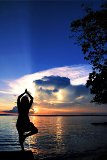
magnificence

My soul is brightened by a light in my heart
When I praised God of mankind
And my soul is cheered up and the tears were flowing
Oh God! guide my heart to reason

In the tranquility of the night I pray during worshiping
While the black darkness is all around me
Oh Kind! Oh Most Merciful! Oh Most Forbearing!
Oh Kind! Your gifts are endless
Oh All-Hearing! Oh Answerer! Oh Most Magnificent!
Oh Creator of the strong predatory animals!

Guide me
Guide me to truth,
God I depend on your guidance today
Oh God of the universe! you are my aid
You are the refuge of man in the afterworld
Here I am, God, asking your forgiveness
Forgive me and grant me my wish

-Ahmad Bukhatir